





The perimenopause, the phase preceding menopause, represents a period of hormonal transition in a woman’s life, which can last several years, estimated to be between 4 and 10 years.
During this stage, levels of estrogen and progesterone fluctuate significantly, resulting in a series of physical and emotional symptoms that can affect quality of life.
Hormonal changes affect not only the reproductive system but also other systems such as the immune and neurological systems due to the interaction of estrogens with various biochemical mediators.
One of the mediators in this process is histamine, which is involved in various physiological responses, including inflammatory and allergic reactions, as well as gastrointestinal regulation.
Histamine is mainly stored in mast cells, a type of immune cell, and is released in response to specific stimuli, such as allergens or hormonal fluctuations.
Under normal conditions, histamine is rapidly degraded by enzymes such as diamine oxidase (DAO) and histamine N-methyltransferase (HNMT).
However, in certain conditions, such as perimenopause, histamine levels may increase due to interactions with female sex hormones, particularly estrogens.
During this phase, estrogen levels may fluctuate more dramatically, which could affect the release and degradation of histamine. This increase in histamine levels may exacerbate some symptoms typical of perimenopause, such as migraines, insomnia, and anxiety, suggesting a link between hormonal fluctuations and histamine levels.
Estrogens, as one of the primary female sex hormones, play an important role not only in regulating the menstrual cycle but also in other systemic functions, including immune response.
During perimenopause, estrogen levels fluctuate, which could have implications for the release and metabolism of histamine.
Mechanisms of Estrogen Influence on Histamine
Mast Cell Activation
Mast cells are immune system cells that store and release histamine, playing a crucial role in allergic and inflammatory responses.
Several studies have shown that estrogens can activate mast cells, leading to the release of histamine and other inflammatory mediators. This activation helps to explain why women in perimenopause may experience more symptoms related to histamine.
Inhibition of DAO (Diamine Oxidase)
DAO is an enzyme that degrades histamine in the intestine. Studies have demonstrated that estrogens can inhibit DAO activity, leading to increased histamine levels in the body. This inhibition is particularly relevant during perimenopause due to hormonal fluctuations, contributing to symptoms like migraines and digestive issues.
Increased Histamine Production
In addition to activating mast cells and reducing histamine degradation, estrogens also positively regulate the enzyme histidine decarboxylase, responsible for converting histidine into histamine. This increases the circulating histamine production, and this rise could contribute to some histamine-related symptoms during perimenopause, such as facial flushing, irritability, or sleep disturbances.
Bidirectional Relationship Between Estrogens and Histamine
The interaction between estrogens and histamine is bidirectional. Histamine can stimulate the production of estrogens by activating H1 receptors in the ovaries, creating a cycle in which elevated estrogen levels increase histamine, and at the same time, histamine promotes the production of more estrogens.
This cycle could worsen some symptoms during perimenopause.
The Role of Progesterone in Regulating Histamine
Progesterone acts as a natural modulator of the inflammatory response. Unlike estrogens, which increase histamine levels, progesterone has a stabilizing effect on mast cells, inhibiting the release of histamine and other inflammatory mediators.
However, during perimenopause, progesterone levels drop more rapidly than estrogen levels, which could lead many women to miss this protective effect, making them more vulnerable to histamine-related symptoms.
Progesterone not only stabilizes mast cells but also enhances DAO activity, helping to degrade histamine in the body.
The early drop in progesterone levels during this phase explains why many women experience intense histamine-related symptoms, such as migraines, anxiety, and insomnia. Furthermore, studies have shown that synthetic progestins, commonly used in many hormonal contraceptives, do not provide the same stabilizing effect as bioidentical progesterone.
Symptoms Related to Elevated Histamine Levels
Elevated histamine levels during perimenopause can lead to a range of symptoms that often overlap with typical symptoms of this life stage, complicating differential diagnosis.
Histamine, by acting on various receptors (H1, H2, H3, and H4) distributed across different tissues, can trigger responses in multiple body systems, intensifying symptoms that may be attributed to hormonal changes when they may actually be related to disturbances in histamine metabolism.
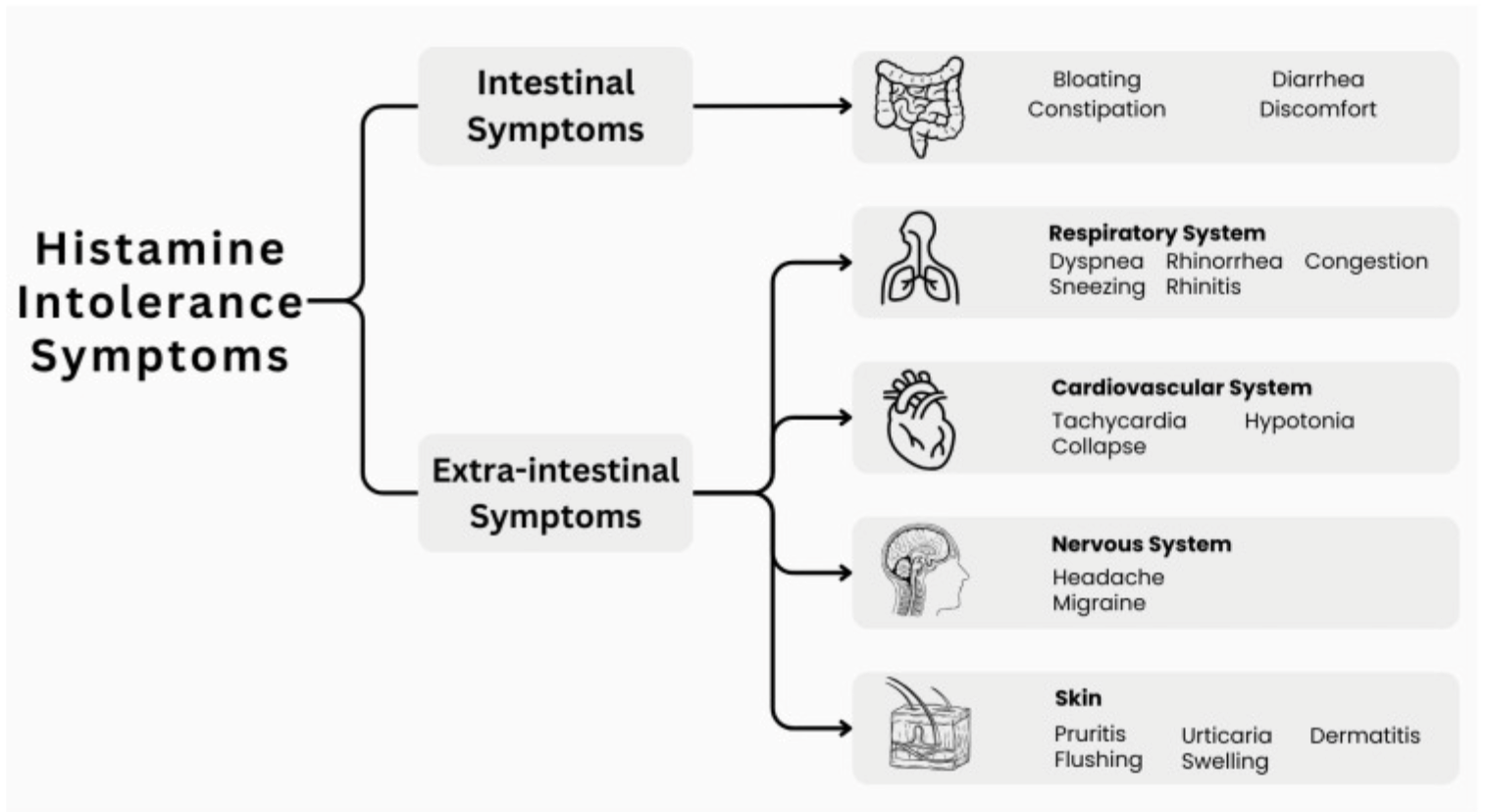
Christoph Jochum (2024)
Migraines and Headaches
Migraines are one of the most common and debilitating symptoms associated with increased histamine levels. Histamine, by acting on H1 receptors, causes vasodilation, which can contribute to the development of migraines. Additionally, fluctuations in estrogen levels, typical of perimenopause, exacerbate this process, as estrogens stimulate histamine release. Studies have shown that women with menstrual-related migraines have higher levels of circulating histamine during estrogen peaks.
Insomnia or Sleep Issues
Histamine acts as a neurotransmitter in the brain, involved in regulating sleep and wakefulness. High histamine levels, especially when combined with hormonal fluctuations, can disrupt sleep cycles, leading to insomnia or difficulty sleeping. Insomnia is often one of the first symptoms experienced by many women during perimenopause.
Anxiety and Irritability
Histamine also has a direct effect on the central nervous system, stimulating alertness, which can lead to symptoms of anxiety, irritability, and nervousness.
Breast Sensitivity
Breast pain and sensitivity are common symptoms of perimenopause and are directly related to increased histamine levels. The action of histamine on H1 receptors increases breast sensitivity, in addition to the influence of estrogens on breast tissue.
Skin Reactions
Elevated histamine levels can cause skin reactions such as redness, itching, and urticaria by activating H1 receptors in the skin. These reactions may be more intense during perimenopause due to hormonal fluctuations.
In Conclusion
During perimenopause, hormonal changes, especially the fluctuation of estrogen levels and the drop in progesterone, can increase histamine levels in the body, which may exacerbate symptoms such as migraines, insomnia, anxiety, and gastrointestinal issues.
Understanding this link between hormones and histamine can help women identify potential triggers for their symptoms and seek appropriate management options. While it is important to keep in mind that each person is different, this knowledge can provide a better understanding of this transitional phase.