


Physiological mechanisms involved
Histamine exerts various effects on the skin through specific receptors (called H1, H2, H3 and H4) found in skin cells and nerves.
Mast cells, a type of immune cell resident in the skin, are the main source of histamine: they store it inside and release it when activated (for example, in response to heat, stress, trauma or immune reactions).
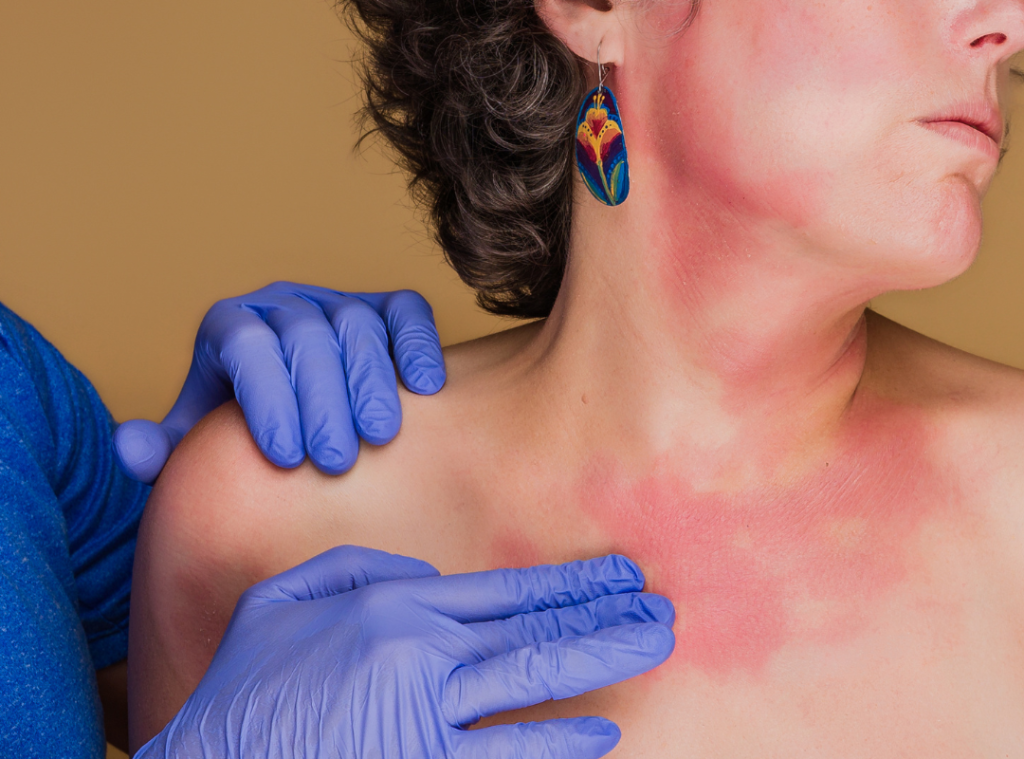
When released, histamine acts on the H1 and H2 receptors of the skin’s blood vessels, producing vasodilation (widening of the vessels). It also increases capillary permeability through H1, causing fluid to escape from the vessels, which leads to oedema or swelling, such as a raised wheal in urticaria.
Another important effect is the induction of pruritus (itching). By binding to H1 and H4 receptors on sensory nerve endings in the skin, it activates these nerve fibres and triggers the sensation of itching. This process also initiates neurogenic inflammation: activated nerves release pro-inflammatory neuropeptides such as substance P or CGRP, which in turn cause more vasodilation and release of mediators, amplifying redness and local inflammation. This is the mechanism behind the so-called axon reflex or flare reaction.
In summary, histamine in the skin causes a characteristic triad:
- ☑️ Redness due to vasodilation.
- ☑️ Oedema due to increased vascular permeability.
- ☑️ Pruritus due to nerve activation.
These effects explain symptoms such as facial flushing, urticaria wheals and itching in various dermatoses. The intensity of the response depends on the type of receptor involved: H1 is more linked to acute itching and immediate vasodilation; H2 contributes to sustained vasodilation and may worsen redness and inflammation; while H4 is involved in attracting immune cells and chronic pruritus.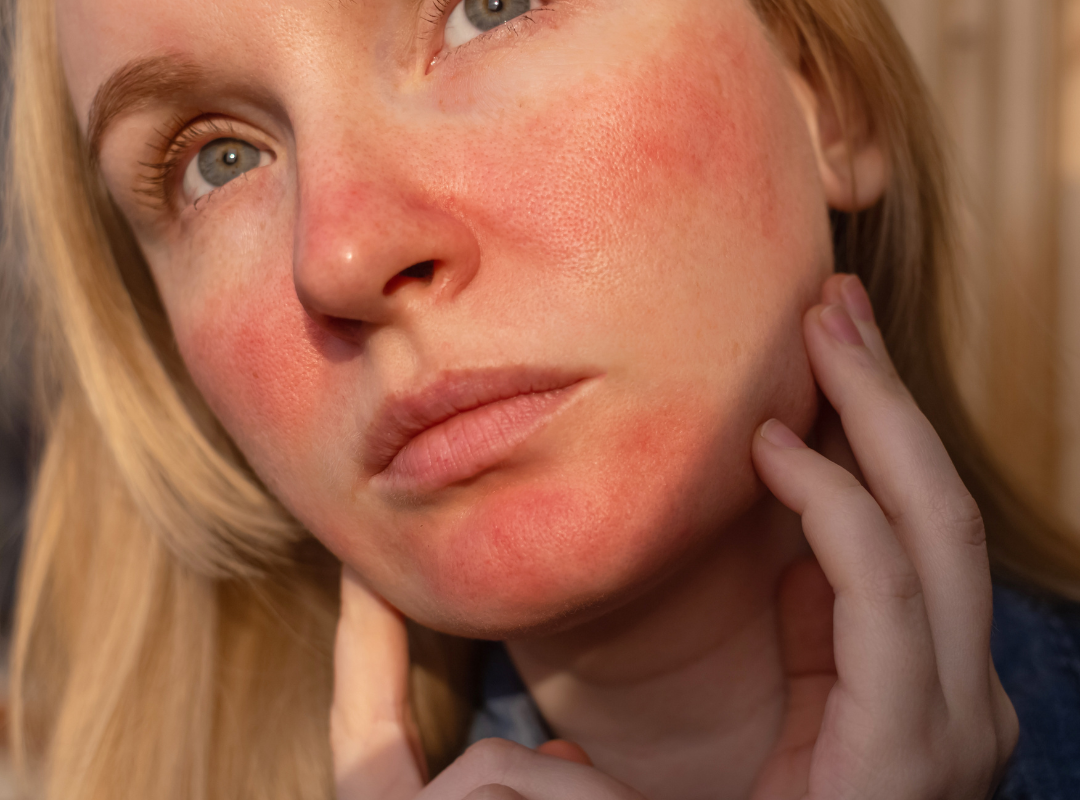
Histamine and rosacea
Rosacea is a chronic skin condition characterised by facial redness, visible dilated blood vessels and sometimes papules and pustules. Although its cause is multifactorial —neurovascular dysregulation, microbial factors such as Demodex, genetic predisposition, etc.—, a possible link with histamine has been observed.
Many classic dietary triggers of rosacea —such as red wine, aged cheeses, cured meats, fermented foods or heavily spiced dishes— are foods rich in histamine or that stimulate its release. A survey by the National Rosacea Society found that among the foods most frequently associated with flare-ups were yoghurt, cheese, soy sauce, wine and chocolate, all of them fermented or with high levels of free histamine.
Pathophysiologically, increased numbers of activated mast cells have been detected in rosacea-affected skin, ready to release histamine and other inflammatory mediators. Preclinical studies suggest that stabilising or blocking mast cell activity can reduce the inflammation characteristic of this condition.
Therefore, histamine released —whether from food or from hyperreactive skin mast cells— can worsen flushing and the inflammatory response in rosacea, although further studies are needed to determine how frequently this mechanism operates.
Histamine and seborrhoeic dermatitis (dandruff)
Seborrhoeic dermatitis is a chronic inflammatory condition that causes flaking (dandruff) and redness, especially on the scalp and areas rich in sebaceous glands. Its main cause is related to the proliferation of the commensal fungus Malassezia and the skin’s inflammatory response to it.
Studies have measured histamine levels in the stratum corneum of the scalp in people with seborrhoeic dermatitis and compared them with healthy individuals. The results showed that affected patients had histamine levels approximately twice as high, correlating with a greater sensation of itching.
Furthermore, after applying effective treatment —such as a zinc pyrithione shampoo for several weeks—, histamine levels in the skin decreased significantly, returning to ranges similar to those of people without dandruff, while patients reported a marked reduction in itching.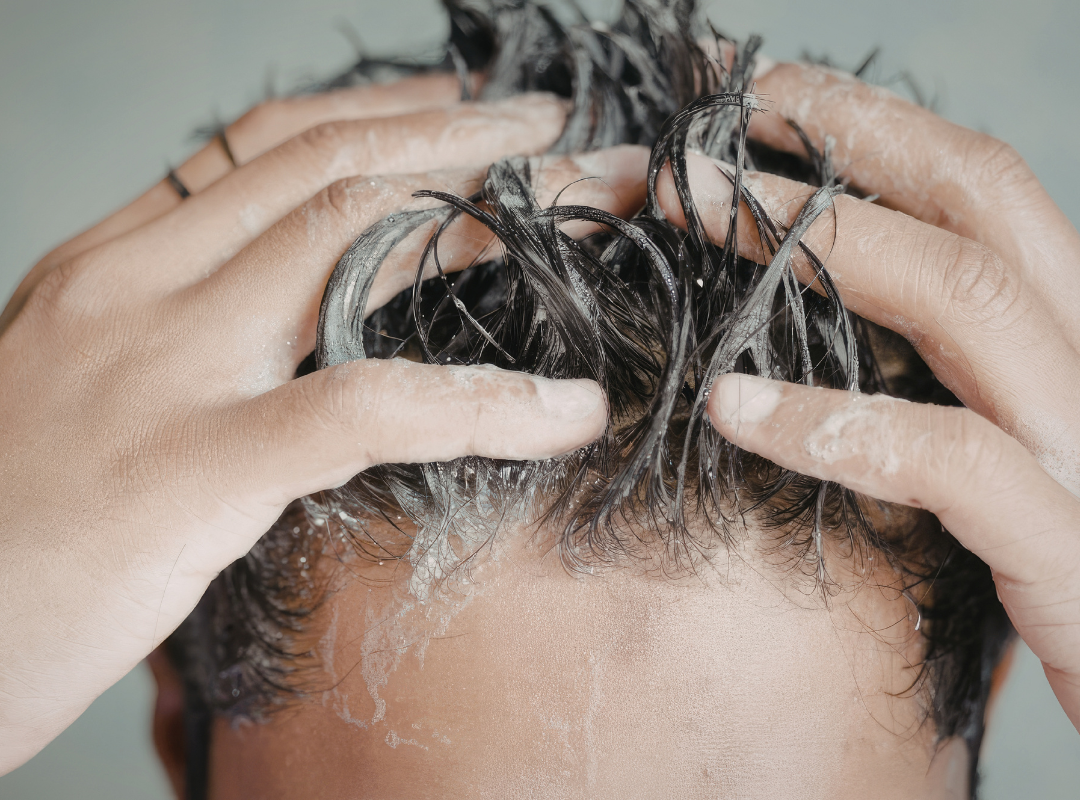
Unlike rosacea or urticaria, in seborrhoeic dermatitis elevated histamine is a more localised phenomenon, with no clear relationship to dietary histamine intake. Seborrhoeic itching will improve primarily by treating the cause (the fungus and skin inflammation), for example with antifungal shampoos, although oral H1 antihistamines are sometimes used empirically to reduce itching.
Histamine, urticaria and chronic pruritus
Histamine is strongly implicated in urticaria (hives) and in many cases of chronic idiopathic pruritus. In chronic spontaneous urticaria, it is believed that there is a spontaneous or facilitated release of histamine by skin mast cells without an identifiable allergen.
Low-histamine diets have been investigated as an adjuvant treatment: a recent systematic review compiled data from 223 patients with chronic spontaneous urticaria who followed a low-histamine diet for four weeks. Approximately 12% achieved complete remission and 44% had partial improvement with that dietary change alone.
Regarding atopic dermatitis (eczema), several studies have found that some atopic patients have higher baseline histamine levels in the blood. In a subgroup of patients with reduced DAO enzyme activity —suggesting concomitant histamine intolerance—, following a strict histamine-free diet produced significant improvements both in intolerance symptoms and in the severity of eczema assessed by clinical scores (SCORAD).
In cases of generalised chronic pruritus without obvious lesions, if medical examination rules out systemic causes, it is sometimes found that patients benefit from continuous antihistamine treatment, indicating that their itching was histaminergic in nature even though no visible wheals were present.
When can NaturDAO supplementation help and when should other mechanisms be considered?
DAO supplementation makes sense when the skin problem is tied to dietary histamine and to a deficiency of the DAO enzyme, because it supplies enzyme that breaks that histamine down in the gut. If symptoms do not change when histamine goes down, it is worth looking for another cause.
Since DAO enzyme deficiency is a key factor in histamine intolerance, one possible intervention is to provide exogenous DAO. Supplementation with NaturDAO is indicated primarily in patients with:
- ☑️ Repetitive systemic symptoms after eating histamine-rich foods.
- ☑️ Low plasma DAO activity on laboratory tests.
- ☑️ Demonstrated improvement with a low-histamine diet.
Pilot studies have shown that oral DAO supplementation significantly improves digestive, cardiovascular, respiratory and skin symptoms in patients with diagnosed histamine intolerance.
However, DAO supplementation is not a universal solution. It is essential to distinguish when histamine comes mainly from the diet versus when it comes from other mechanisms:
- ☑️ In rosacea where flushing is predominantly triggered by heat or stress, taking DAO will likely not prevent those flushings.
- ☑️ In seborrhoeic dermatitis, the main focus should be treating the skin (shampoos, antifungals) rather than systemic diet.
- ☑️ In pruritus from dry skin, restoring hydration and using topical anti-inflammatories is more effective.
Other contributing mechanisms should also be considered:
- ☑️ Impaired skin barrier: damaged skin allows greater penetration of irritants that activate mast cells locally.
- ☑️ Skin microbiome and infections: in rosacea, Demodex proliferation; in seborrhoeic dermatitis, the yeast Malassezia; in chronic urticaria, sometimes underlying infections such as Helicobacter pylori or intestinal dysbiosis. In fact, it has been documented that a proportion of rosacea patients have small intestinal bacterial overgrowth (SIBO) and, when treated, their skin improves notably.
- ☑️ Systemic inflammation or other non-histaminergic pathways: some conditions cause pruritus through mediators other than histamine (IL-31 cytokines in renal pruritus, endogenous opioids, neuropeptides, etc.), where adding DAO will have no impact.
In summary, NaturDAO supplementation helps when the problem is primarily an excess of dietary histamine that the body cannot eliminate. If the skin problem persists despite a low-histamine diet and DAO supplementation, other mechanisms must be explored: skin barrier health, the microbiome, systemic inflammation or other underlying causes.
Histamine is one piece of the puzzle, but not the only factor in every case. A comprehensive and personalised approach is key.